


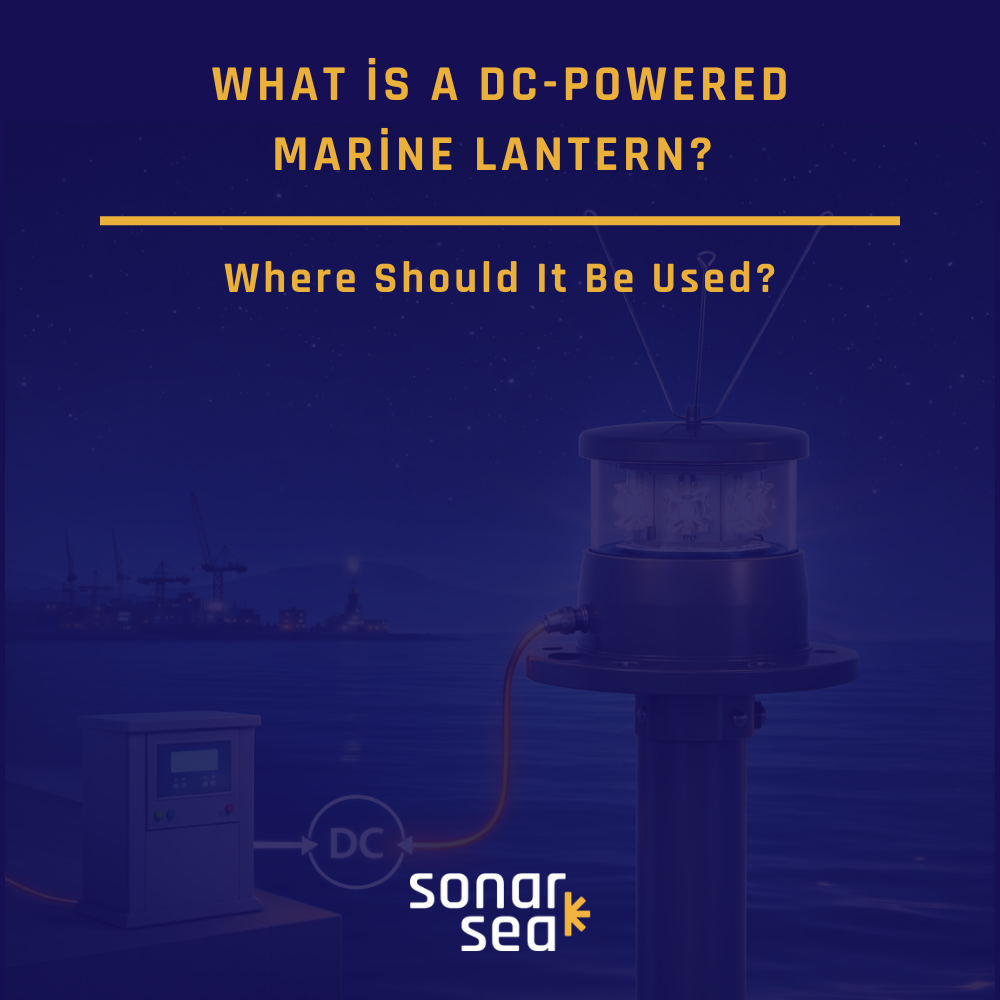
What is a DC-Powered Marine Lantern? Where Should It Be Used?
Aids to navigation are essential for ensuring safe maritime operations and are widely used from ports to offshore facilities. One of the most critical components of these systems is the marine lantern, which ensures that structures and navigation points are clearly visible at sea.
Marine lanterns can operate with different power sources. Among them, DC-powered marine lantern solutions stand out as a reliable and efficient option, especially for projects with fixed energy infrastructure. In this article, we will discuss what DC-powered marine lanterns are, in which projects they are preferred, and the key technical criteria to consider when selecting them.
What is a DC-Powered Marine Lantern?
A DC-powered marine lantern is a navigational aid that operates using a direct current (DC) power source. These systems are typically fed from an external DC power supply, energy infrastructure, or a central power system.
Unlike solar-powered systems, DC-powered marine lanterns can operate without solar panels or batteries. This is a significant advantage for ports and industrial maritime projects where an energy infrastructure already exists.
DC-powered systems are generally integrated with the following energy sources:
- Port or facility electrical infrastructure
- Central power distribution systems
- Industrial DC power units
- Offshore platform energy systems
This setup ensures that the marine lantern operates with a stable and uninterrupted power supply.
Projects Where DC-Powered Marine Lanterns Are Used
DC-powered marine lantern systems are particularly preferred in maritime projects with fixed energy infrastructure. Common applications include:
Port Entrances and Navigation Channels
Ports and navigation channels are areas with high vessel traffic. Marine lanterns in these regions must be highly reliable. DC-powered systems can be integrated into port infrastructure to ensure continuous operation.
Marinas
Marine lanterns in marinas are used to provide visibility at piers and entry points. Since these structures typically have an existing electrical infrastructure, DC-powered systems offer a practical solution.
Offshore Platforms
Offshore energy facilities and platforms also require navigational markers. These facilities usually have central power systems, allowing DC-powered marine lanterns to be directly integrated.
Bridges and Piers
Bridge supports, piers, and other fixed structures on the water pose potential risks to vessels. High-visibility marine lanterns are essential for marking these structures.
Advantages of DC-Powered Marine Lantern Systems
DC-powered marine lantern systems offer several advantages, making them the preferred choice for many projects:
Stable Power Source
Solar systems rely on environmental conditions to generate energy. DC-powered systems, on the other hand, draw directly from the energy infrastructure, providing more stable operation. Additionally, DC-powered marine lanterns allow the device to operate at full capacity, ensuring that the lanterns can function at maximum light intensity in every location and condition. In prolonged adverse weather, the risk of solar systems shutting down does not exist with DC systems, which further enhances navigation safety.
Uninterrupted Operation
Marine lantern solutions connected to central power systems operate continuously without the need for energy generation or storage processes.
Simpler System Architecture
Solar marine lanterns require solar panels, batteries, and charge controllers. DC-powered systems eliminate these components, simplifying the system architecture.
Easy Integration
DC-powered marine lanterns can be easily integrated with port automation systems or central control infrastructures.
Technical Criteria to Consider When Selecting a Marine Lantern
When selecting a marine lantern system, the power source is not the only factor—other technical criteria should also be evaluated:
Visibility Range
The visibility range of a marine lantern is critical for navigation safety. Ports, marinas, and offshore areas have different range requirements.
Energy Consumption
In DC-powered systems, energy consumption must be compatible with the central energy infrastructure. Efficient energy use is important for long-term operation.
IP Protection Rating
The marine environment is harsh, with exposure to water and salt. Marine lanterns must have a high IP protection rating.
Mounting and Durability
The mounting method and durability of the marine lantern must withstand wind, waves, and marine conditions.
DC-powered marine lantern systems play a critical role in navigation safety and operational efficiency in ports, marinas, and offshore projects. Choosing the right marine lantern ensures safe maritime traffic while minimizing maintenance costs and operational risks.