


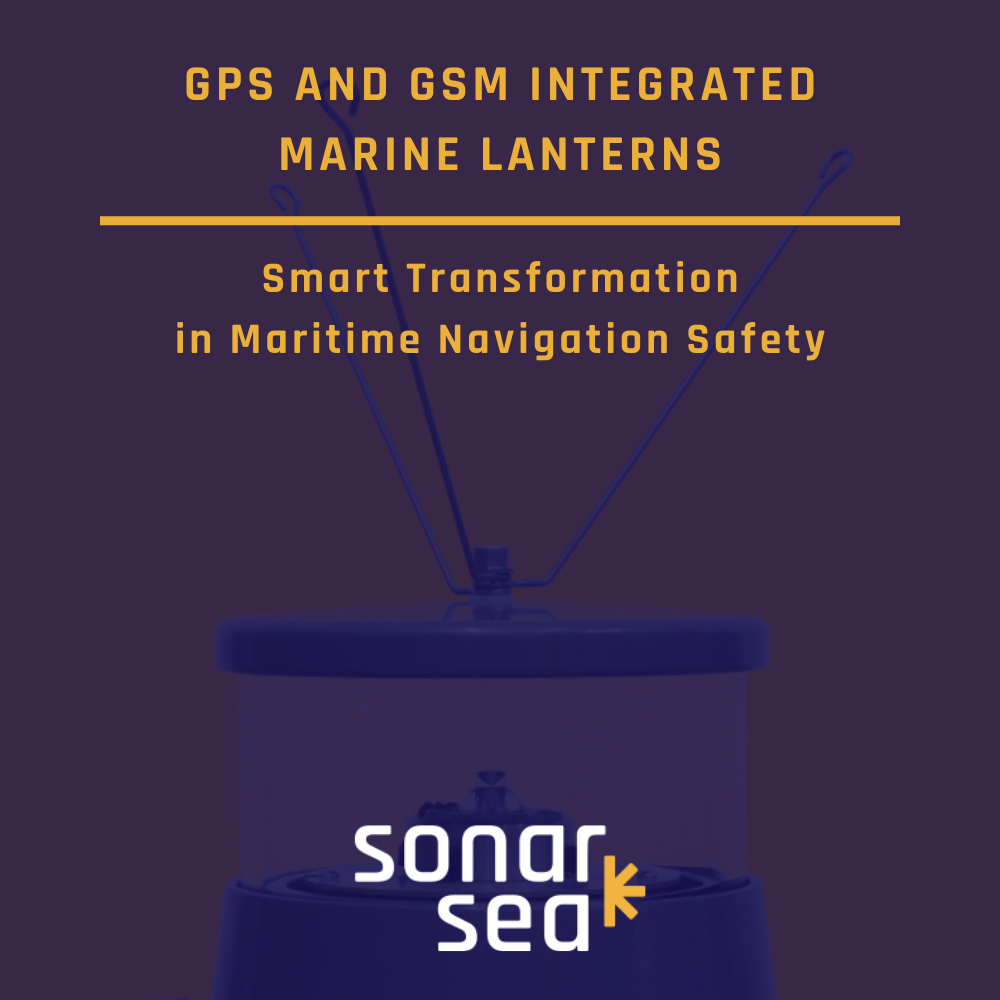
The maritime sector has entered a new era of safety and control with the advancement of digitalization and remote monitoring technologies. Especially on ports, breakwaters, coastal structures, and offshore platforms, GPS and GSM integrated marine lanterns are no longer just visibility aids; they have become active components of infrastructure security.
The locally manufactured lantern series developed by SonarSea enhance maritime navigation safety while supporting investment protection and operational sustainability.
What is a GPS-Synchronized Marine Lantern?
Marine lanterns equipped with a GPS module enable multiple lanterns to flash simultaneously and in synchronization. This technology is particularly useful for:
- Port entrance and exit channels
- Long breakwater structures
- Bridge approach zones
- Industrial coastal facilities
Synchronized systems provide visual consistency and create a professional navigation pattern. They increase detectability in maritime traffic and significantly enhance navigational safety.
What is a GSM-Integrated Marine Lantern?
Marine lanterns with a GSM module can transmit the device’s status and location information to a central system. This feature offers significant advantages, especially for critical maritime infrastructure:
- Immediate detection if a buoy or lantern is displaced
- Monitoring of energy levels and system health
- Fault notifications
- Remote control and intervention planning
- Data-driven maintenance management
GSM-enabled lanterns reduce operational risk and enhance asset security in ports and offshore projects with high maritime traffic.
LED Optics and Power Management
Energy management is critical for GPS or GSM-enabled marine lantern systems. SonarSea lantern solutions offer:
- High-efficiency LED optical systems
- Optimized low energy consumption
- Corrosion and saltwater-resistant housing
- Impact and corrosion durability
- Extended maintenance intervals
This ensures reduced operational costs and long service life.
Solar-Powered and DC-Powered Marine Lantern Options
Energy infrastructure can vary depending on the project. Therefore, marine lantern systems are offered in two main power types:
Solar-Powered Marine Lanterns
- Operate independently
- Do not require external power lines
- Ideal for hard-to-reach locations
DC-Powered Marine Lanterns (12 VDC)
- Integrated into existing power infrastructure
- Provides continuous and stable power
- Preferred in ports, shipyards, and industrial facilities
Choosing the correct power type is critical for system reliability and maintenance planning.
SonarSea Marine Lantern Series
SonarSea offers series-based solutions for different range and application requirements:
LN14 Series
- Compact design with low energy consumption
- GPS synchronization option available
- No GSM data transmission
LN25 Series
- Designed for medium-range applications
- Balanced performance in port and coastal projects
- GPS synchronization and GSM options available
LN25-DC Series operates on 12 VDC and offers GPS and GSM options.
LN59 Series
- Used in high-range offshore and port entrance projects
- GPS synchronization and GSM options available
LN59-DC Series is a DC-powered version, delivering maximum performance in facilities with existing energy infrastructure.
Why Choose GPS and GSM Integrated Marine Lanterns?
While traditional systems only provide visibility, new-generation integrated solutions:
- Enhance navigational safety
- Maintain infrastructure integrity
- Reduce operational risks
- Shorten intervention times
- Support investment sustainability
For port authorities, shipyards, and offshore energy projects, selecting the right marine lantern is not just an equipment investment; it is a direct investment in safety and risk management.
GPS-synchronized and GSM-integrated marine lantern systems set a new standard in maritime navigation safety. With solar-powered or DC-powered options and project-specific configurations, SonarSea series provide maximum visibility, control, and durability in modern maritime infrastructure.
Choosing the right technology is fundamental to safety at sea.