


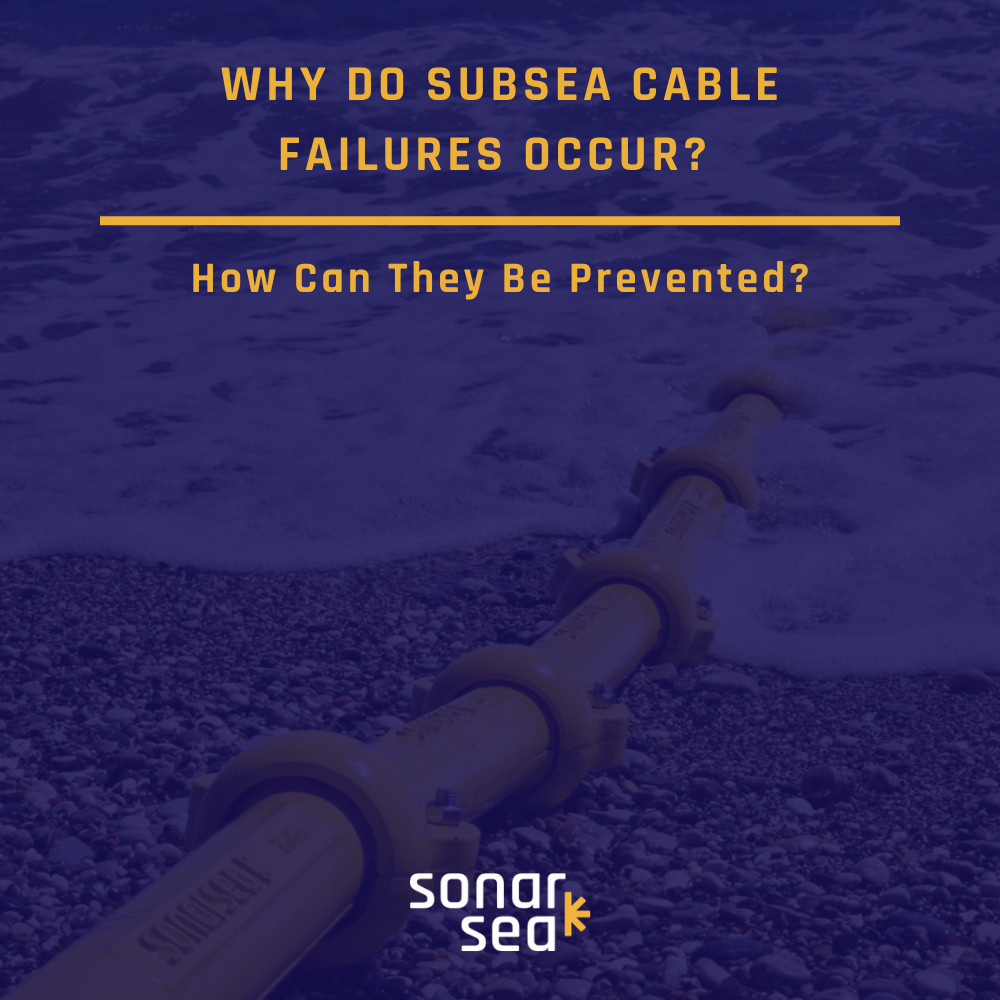
Why Do Subsea Cable Failures Occur? How Can They Be Prevented?
Subsea cables, which form the backbone of underwater energy and communication infrastructure, play a critical role in a wide range of applications, including intercontinental data transmission, coastal-to-coastal power interconnections, and offshore projects. In particular, these cables are essential components that ensure uninterrupted operation of infrastructure connecting cities, islands, and coastal regions. Their safe and reliable performance is crucial for both operational continuity and the prevention of high-cost failures.
However, subsea cables are exposed to various damage risks due to harsh marine conditions and external influences. Field data shows that a significant portion of cable failures is directly caused by third-party interference, such as ship anchors, fishing activities, and other human-induced physical impacts. Therefore, the use of proper protection systems is a critical requirement for project success.
In this article, we examine the main causes of subsea cable damage and how these risks can be prevented.
Main Causes of Subsea Cable Damage
Mechanical Impacts and Physical Forces
One of the most common causes of subsea cable damage is mechanical impact. In particular:
- Ship anchors
- Fishing equipment
- Seabed movements
can cause severe physical damage to cables.
Abrasion and Friction
Movements on the seabed, wave action, and ocean currents can gradually cause abrasion on the outer surface of the cable. Unprotected cables, in particular, are exposed to serious long-term degradation risks. Additionally, if the seabed consists of rocky, coarse, or hard terrain, abrasion occurs much faster, significantly increasing the risk of mechanical damage.
Bending and Tension
Improper cable installation (incorrect laying), insufficient support along the route, or uncontrolled tension during deployment can result in:
- Excessive bending (exceeding the minimum bending radius)
- Tensile and pulling stresses
These conditions create mechanical strain within the cable structure, weakening its long-term structural integrity and increasing the risk of failure.
Cable Landing Zone Risks
The areas where subsea cables transition from sea to land are among the most critical zones. In these regions:
- Wave impact
- Ground movements
- Human interference
significantly increase the risk of damage.
How Can Subsea Cable Damage Be Prevented?
Protecting subsea cables requires a proper engineering approach and the use of suitable protection systems.
Use of Articulated Protection Pipe
One of the most effective subsea cable protection solutions is the use of articulated protection pipe systems.
These systems:
- Protect the cable against mechanical impacts
- Minimize abrasion
- Balance bending and tensile loads
- Significantly extend the operational lifespan of the cable
They play a critical role, especially in cable landing zones and other high-risk areas.
Proper Cable Route Planning
Correct positioning of the cable on the seabed is one of the most important factors in reducing risk. High-risk areas should be avoided, and seabed conditions must be carefully evaluated.
Professional Installation and Engineering
Improper installation practices are among the leading causes of cable failures. Therefore, accurate engineering planning and execution must be ensured from the earliest stages of the project.
Subsea cable failures can lead to significant operational losses and project delays. For this reason, the use of proper protection systems is not just an option but a necessity.
In particular, articulated protection pipe solutions play a critical role in ensuring that subsea cables operate safely, sustainably, and with extended service life.
With the right engineering approach and appropriate product selection, subsea infrastructure can be protected and investments can be secured.