


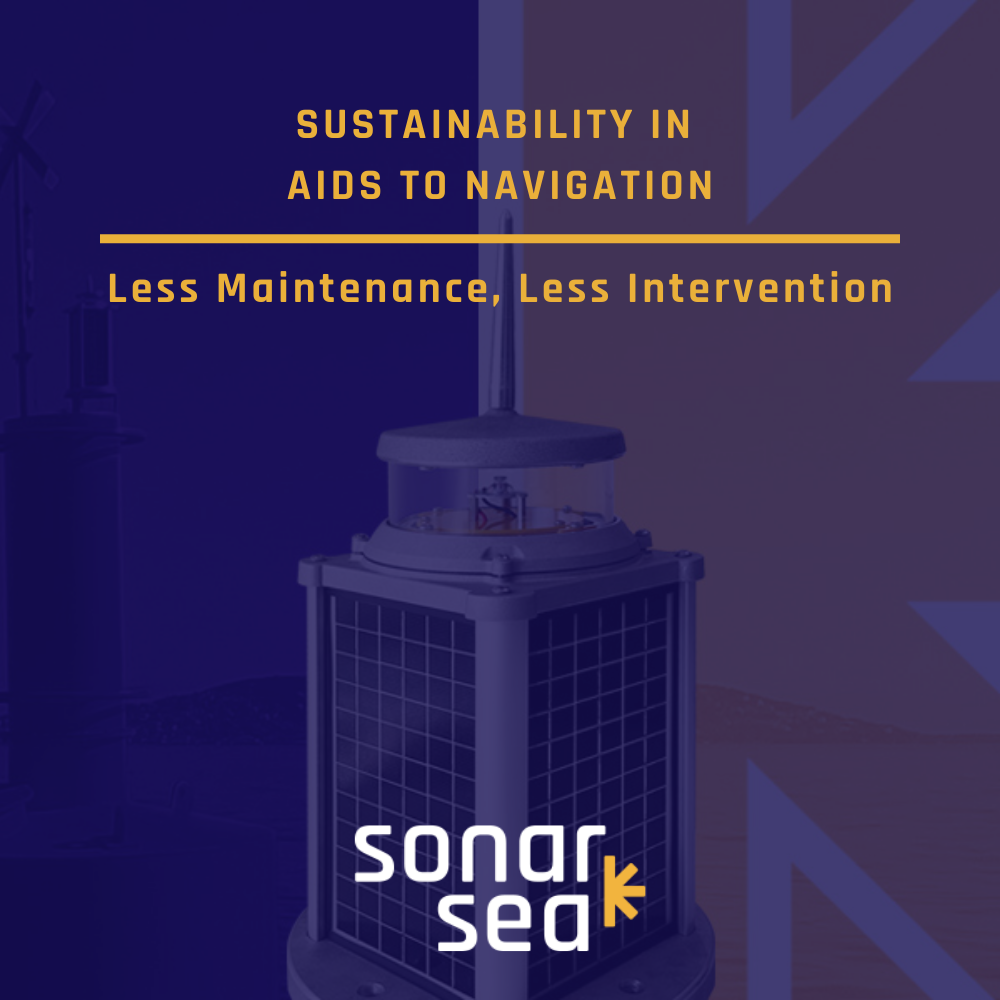
Sustainability in Aids to Navigation: Less Maintenance, Less Intervention
Maritime infrastructure requires not only operational continuity but also environmental responsibility. Aids to navigation used in ports, marinas, offshore facilities, and open-sea routes are fundamental components of maritime safety while also playing a critical role in sustainability.
Sustainable aids to navigation reduce environmental impact and operational costs by offering lower maintenance requirements, fewer field interventions, and long-term reliable performance.
Why Is Sustainability Important in Maritime Infrastructure?
Traditional maritime equipment that requires frequent maintenance and regular field interventions leads to higher operational costs and increased carbon emissions. Each maintenance operation carried out by service vessels results in:
- Increased fuel consumption
- Higher emission levels
- Loss of time and workforce
For this reason, sustainable maritime infrastructure is not only an environmental responsibility but also an economic necessity. Low-maintenance and long-life aids to navigation have become indispensable elements of modern maritime projects.
What Does “Less Maintenance” Mean for Aids to Navigation?
Low maintenance requirements in aids to navigation begin at the design stage. With the right engineering approach, maintenance frequency can be significantly reduced.
Long-Life Marine Lantern Design
A high-quality marine lantern must be designed to withstand harsh marine environments. Corrosion-resistant housings, UV-resistant materials, and high-efficiency optical systems ensure consistent performance over many years.
As a result:
- The need for component replacement is reduced
- Failure risk is minimized
- Maintenance intervals are extended
Continuous Operation with Solar Energy
Solar marine lantern systems are among the most tangible examples of sustainability in aids to navigation. Operating independently without external power sources, these systems deliver long-term and reliable performance through energy-efficient design.
The use of solar energy:
- Eliminates dependency on grid power
- Reduces battery replacement frequency
- Lowers overall energy costs
These advantages are especially critical for buoy systems and remote offshore applications.
Less Intervention = Lower Carbon Footprint
Reduced maintenance requirements directly translate into fewer field interventions. Fewer service operations mean:
- Lower fuel consumption
- Reduced emissions
- Safer and more predictable operations
Consequently, sustainable design in aids to navigation systems contributes directly to reducing the overall carbon footprint of maritime operations.
A Sustainable Approach in Buoy Systems
Buoy systems play a vital role in managing and guiding marine traffic. The compatibility of marine lantern solutions with buoy structures is essential for achieving sustainability in these systems.
Energy-efficient, long-life, and low-maintenance solutions:
- Extend the service life of the buoy
- Increase operational continuity
- Ensure uninterrupted maritime safety
This approach provides significant advantages, particularly in high-traffic ports and offshore regions.
Protecting Investment with Sustainable Aids to Navigation
Sustainability is not solely an environmental concept—it also reduces the total cost of ownership. Less maintenance, fewer spare parts, and longer service life help protect investments over the long term.
Properly selected aids to navigation solutions:
- Ensure operational continuity
- Optimize maintenance budgets
- Increase the reliability of maritime infrastructure
Sustainability Is an Operational Requirement
Sustainability in aids to navigation is no longer a preference; it is an operational requirement for modern maritime projects. Solutions that offer less maintenance and fewer interventions reduce environmental impact while ensuring long-term maritime safety.
Long-life, energy-efficient, and reliable marine lantern and buoy systems form the foundation of a sustainable maritime infrastructure.