


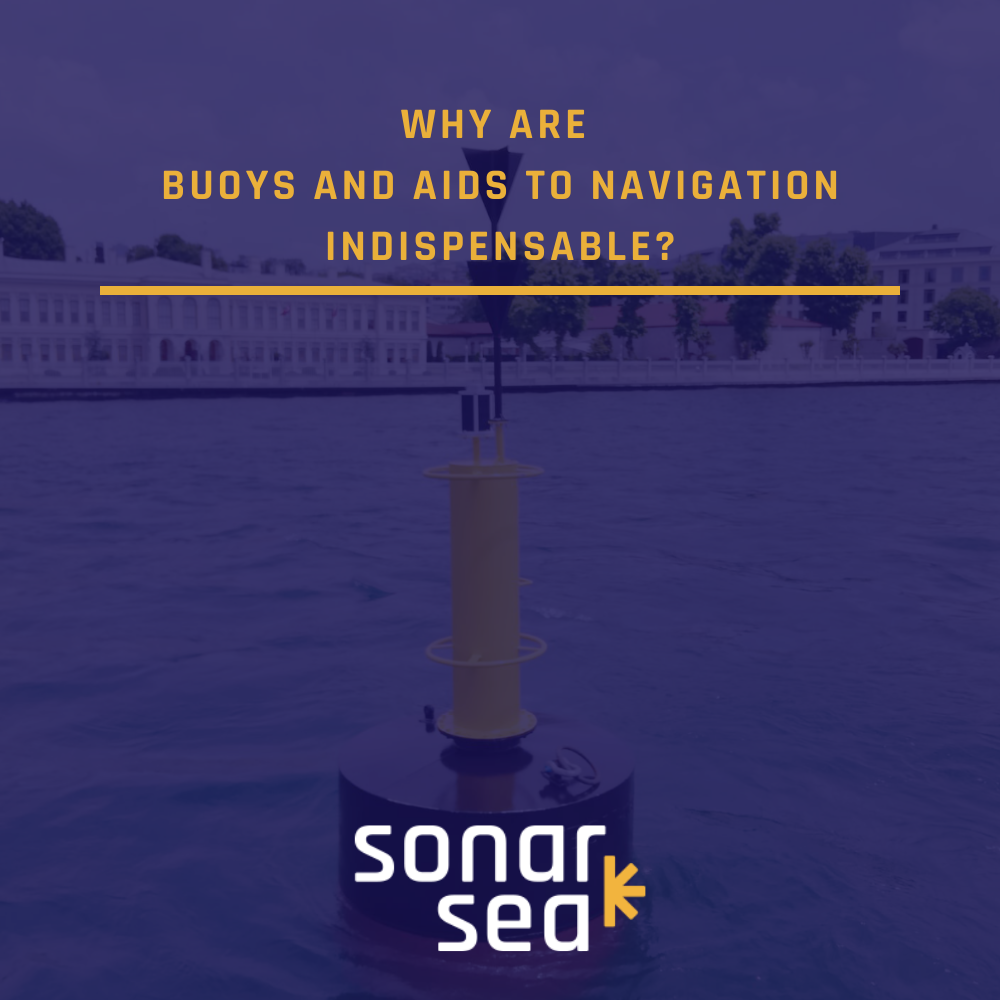
Is Maritime Navigation Possible Without Buoys and Aids to Navigation?
Although modern navigation systems offer advanced technologies such as radar, AIS, ECDIS, and GPS, all of these systems require reliable reference points. Electronic systems may fail, experience signal loss, or lose functionality due to environmental conditions. This is where buoys provide mariners with fixed, physical, and consistently perceivable reference points under all conditions.
In areas where buoys are absent or insufficient:
- Navigational errors increase,
- The risk of collision and grounding rises,
- Port entry and exit operations lose safety,
- Critical infrastructure such as subsea cables and pipelines may be damaged,
- Environmental incidents and operational disruptions become inevitable.
For this reason, buoys are not merely directional markers; they are systems that make risks visible and manageable.
What Do Buoys Provide as Aids to Navigation?
1. Visual and Operational Clarity
Buoys reduce complexity in the marine environment. They clearly and understandably mark channel boundaries, safe passage routes, hazardous areas, and special-use zones. Especially in ports and marinas with heavy traffic, this marking enables maritime traffic to become orderly and predictable.
2. Safe Navigation and Accident Prevention
One of the primary functions of buoys is to provide early warning of potential hazards. Through cardinal and lateral buoys, vessels can:
- Avoid shallow waters,
- Pass from the correct side,
- Perform controlled maneuvers in confined areas.
This structure minimizes human error and significantly reduces the likelihood of accidents.
3. Infrastructure and Investment Protection
Buoys are critical not only for vessels but also for the protection of subsea cables, pipelines, and energy and communication infrastructures. Special-purpose buoys clearly mark these areas and reduce the risk of physical contact. This approach ensures the protection of high-value maritime infrastructure investments.
4. Operational Continuity
Buoys are passive and active marking elements operating 24/7. Buoys equipped with lighting and solar systems maintain their function even at night, in fog, and under low-visibility conditions. This continuity enables uninterrupted port and offshore operations.
The Central Role of Buoys in Aids to Navigation
Aids to navigation consist of lighthouses, beacons, radar reflectors, and electronic support elements. However, buoys always stand at the center of these systems. This is because buoys offer:
- Rapid deployment,
- Adaptability to varying depths and site conditions,
- Modular and scalable solutions,
- Effective use in temporary or permanent projects.
With these characteristics, buoys provide flexibility and control in maritime operations.
Safe and Sustainable Marking with SonarSea Buoys and Aids to Navigation
SonarSea buoys deliver engineering solutions that prove in the field why aids to navigation are indispensable. Designed with harsh marine conditions, limited maintenance opportunities, and long service life expectations in mind, SonarSea buoys provide:
- Reliable visibility,
- High structural durability,
- Long-term operational stability,
thereby contributing directly to maritime safety.
Thanks to its local manufacturing infrastructure, SonarSea buoys support safe navigation, asset protection, and operational continuity objectives in ports, marinas, offshore projects, and infrastructure applications.
Without buoys and aids to navigation, maritime operations become uncontrolled and unpredictable. Buoys make risks visible, establish safe routes, and render maritime traffic manageable. For this reason, buoys are indispensable elements of aids to navigation.
SonarSea buoys fulfill this critical role with engineering-driven, reliable, and sustainable solutions, positioning themselves as one of the fundamental safety components of modern maritime projects.